
Books by Peter Kosc
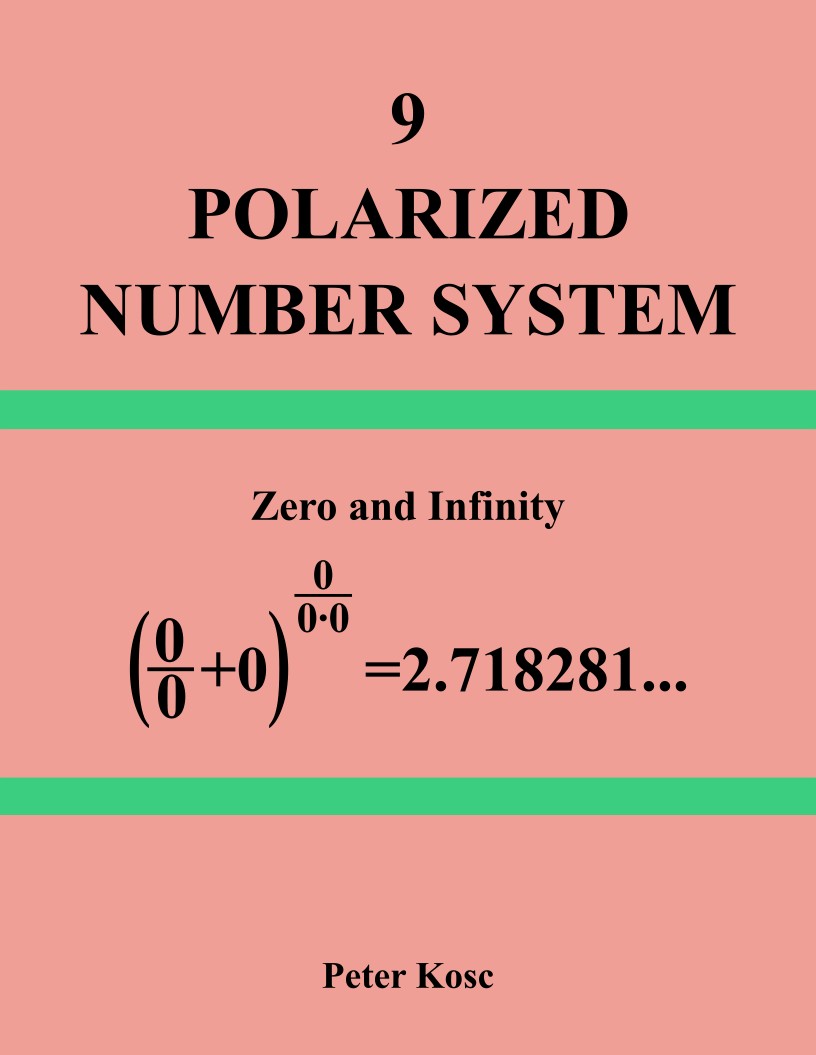
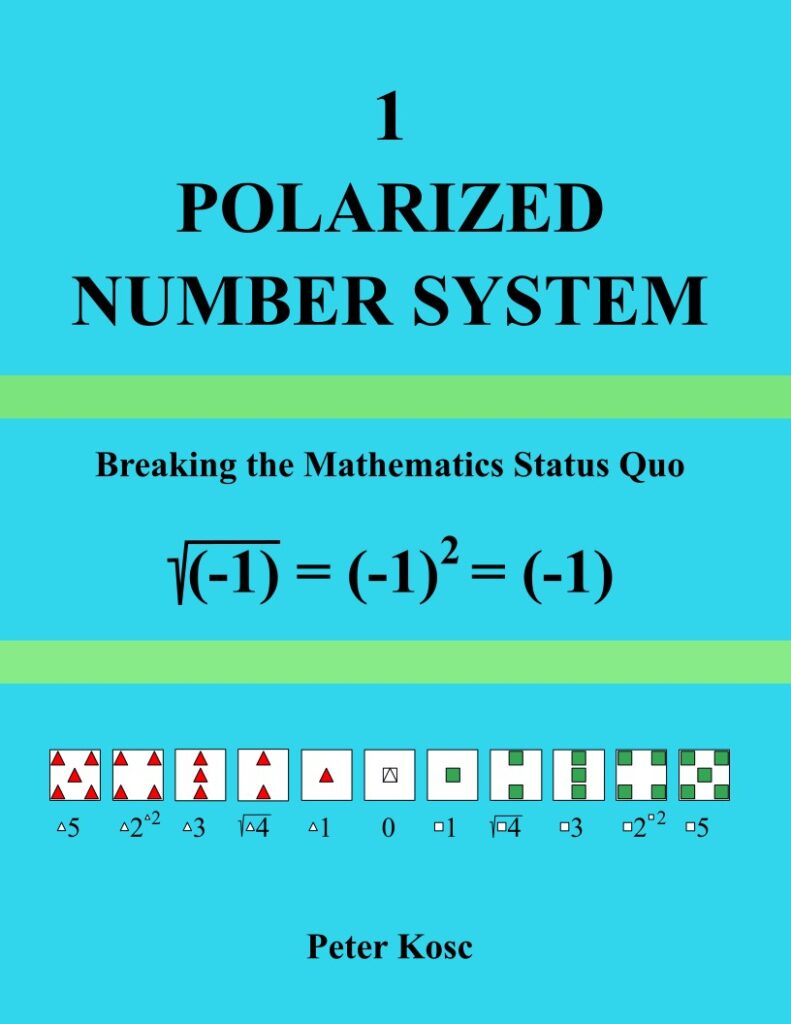
WHAT IF THE FOUNDATIONAL RULES OF MATHEMATICS ARE FUNDAMENTALLY FLAWED?
For centuries, we have been taught that the principles of mathematics are absolute. Yet, even elementary operations in the real number system break down. When forced to divide by zero or find the real square root of a negative number, standard mathematics fails—leaving us to rely on arbitrary rules, exceptions, and “undefined” labels to mask the system’s limitations.
The truth is simple: The real number system is obsolete. It lacks the essential tools to handle basic mathematical operations properly.
INTRODUCING THE POLARIZED NUMBER SYSTEM
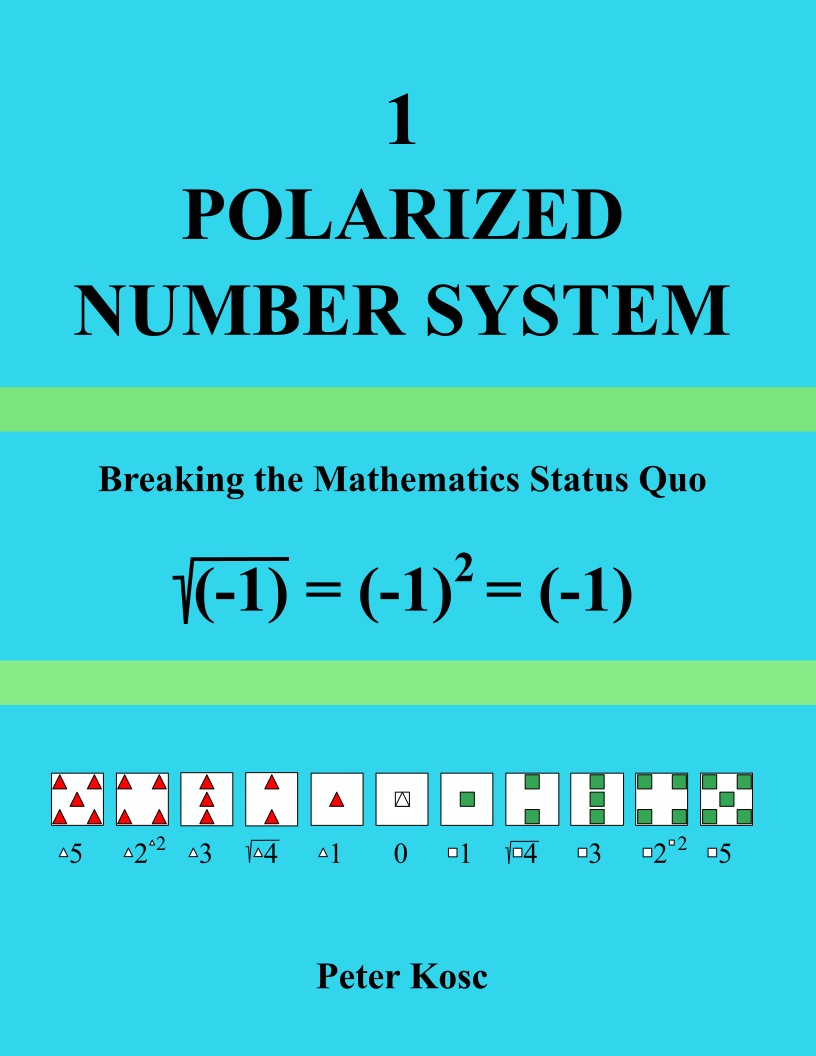
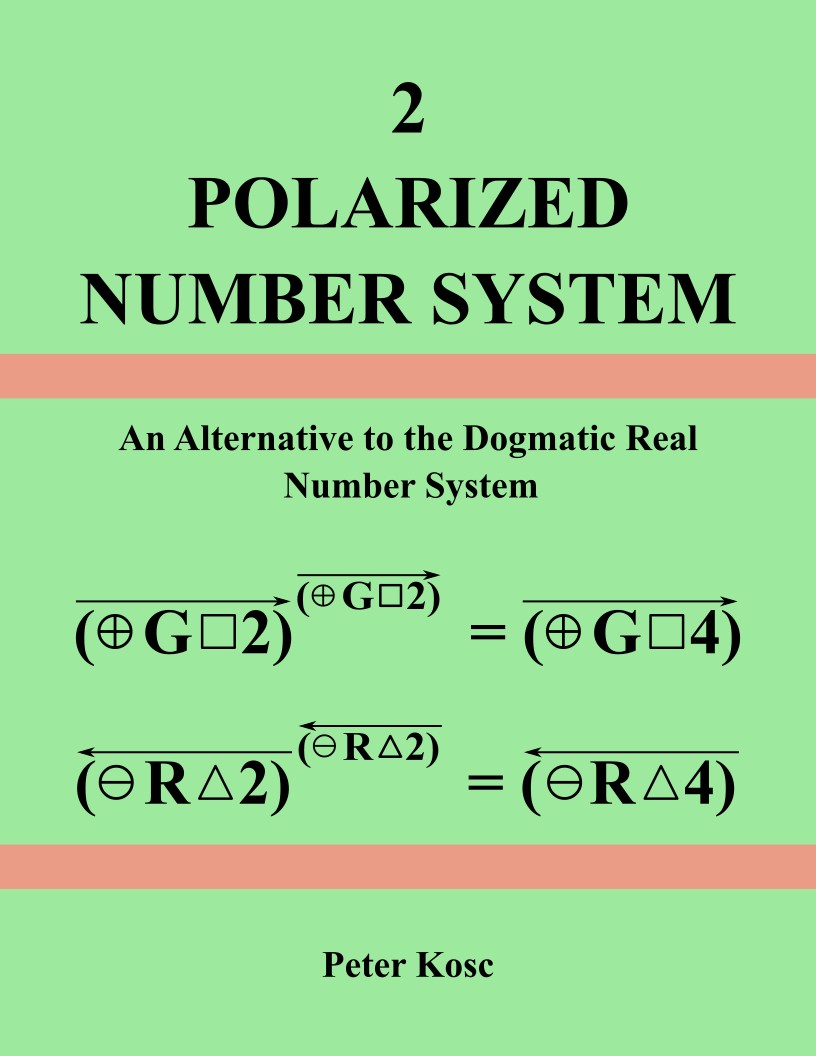
This groundbreaking book introduces a new mathematical framework designed to resolve the logical gaps of traditional arithmetic. Contrary to conventional belief, the Polarized Number System demonstrates that all numbers—including zero—can be positive or negative, while absolute-value numbers exist as a distinct, non-positive class.
Because mathematical operations in the polarized system operate on fundamentally different principles, they unlock consistent solutions where traditional math yields contradictions.
KEY TAKEAWAYS & REVOLUTIONARY CONCEPTS
- The Problem with Real Numbers: Discover why standard arithmetic requires “clever excuses” and exceptions when handling elementary operations.
- Signed Zero & Absolute Values: Learn how zero carries positive and negative polarities, and why absolute values are not positive numbers.
- A Rigorous, Step-by-Step Framework: Explore step-by-step instructions, logical proofs, and practical exercises designed to redefine your understanding.
- Resolution of Classic Anomalies: See how division by zero and negative square roots are handled natively without breaking mathematical logic.
The final title and design are to be determined.
Series Title: The Polarized Number System
Volume 1 Title: Breaking the Status Quo: A New Framework for Real Numbers
Volume 1 Title: Beyond the Status Quo: Rethinking Positive, Negative, and Zero
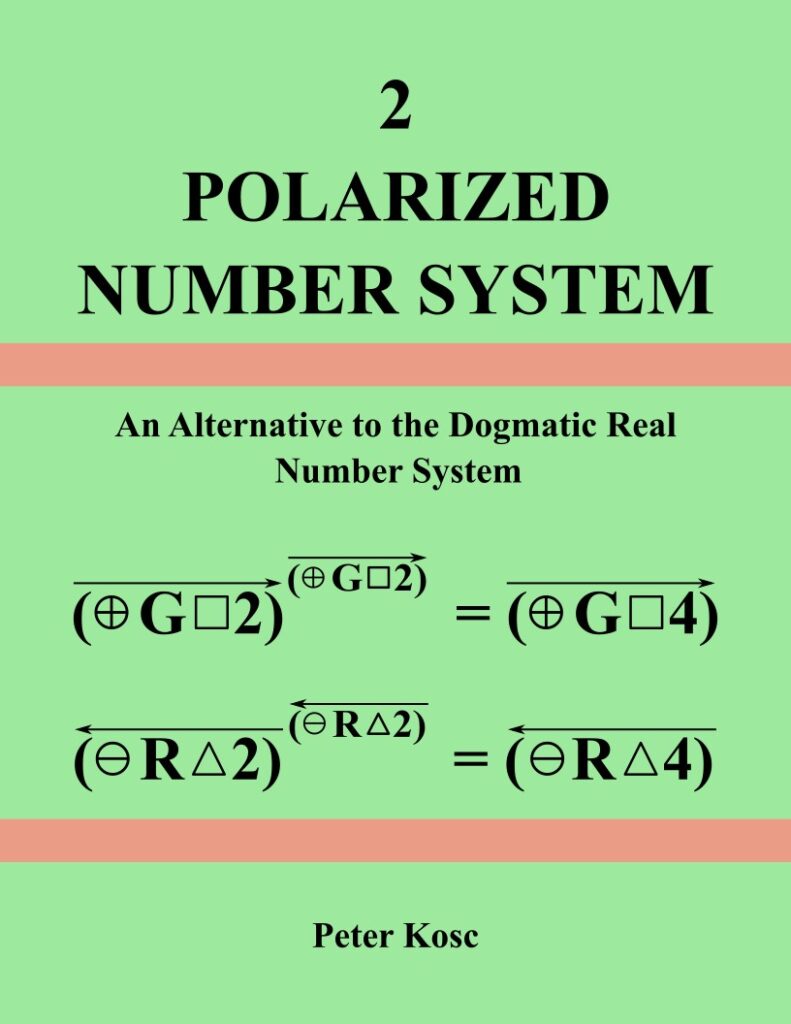
WHAT IF POSITIVE AND NEGATIVE NUMBERS AREN’T WHAT WE WERE TAUGHT?
In standard mathematics, signed numbers are treated as simple scalars—a fundamental flaw that renders operations like finding the real square root of a negative number “impossible.”
The second volume of the Polarized Number System series shatters this limitation. By demonstrating that positive and negative numbers are actually vectors, this book reveals that calculating roots of negative values isn’t an anomaly—it is a straightforward, logical process when given the proper framework.
REAL-WORLD PROOFS & REVOLUTIONARY CONCEPTS
Moving beyond abstract rules, this volume grounds new mathematical principles in concrete, physical systems:
- Subatomic Logic: Learn how the positive and negative charges of protons and electrons illustrate core operations like multiplication, division, and exponents.
- Financial Vectors: See how the real-world dynamics of cash and debt provide intuitive models for vector arithmetic.
- The Concept of Negative Areas: Discover how signed dimensions redefine geometry and lay the groundwork for a Pythagorean theorem incorporating negative space.
- Resolution of Impossible Roots: Master the step-by-step mechanics of finding real square roots of negative numbers natively.
BUILT FOR RIGOROUS UNDERSTANDING
Overturning centuries of deeply ingrained mathematical consensus requires absolute proof. Written as a thorough reference manual complete with step-by-step exercises, this volume is purposefully detailed. It provides the logical foundation necessary to challenge dogmatic axioms and rebuild your understanding of numbers from the ground up.
WHO THIS VOLUME IS FOR
This book is written for mathematicians, physicists, logicians, and curious minds who enjoyed Volume 1 and are ready to explore the geometric and vector applications of the Polarized Number System.
The final title and design are to be determined.
Polarized Number System: Dismantling Mathematical Dogma
Polarized Number System: Challenging the Real Number Dogma
POLARIZED NUMBER SYSTEM - 3
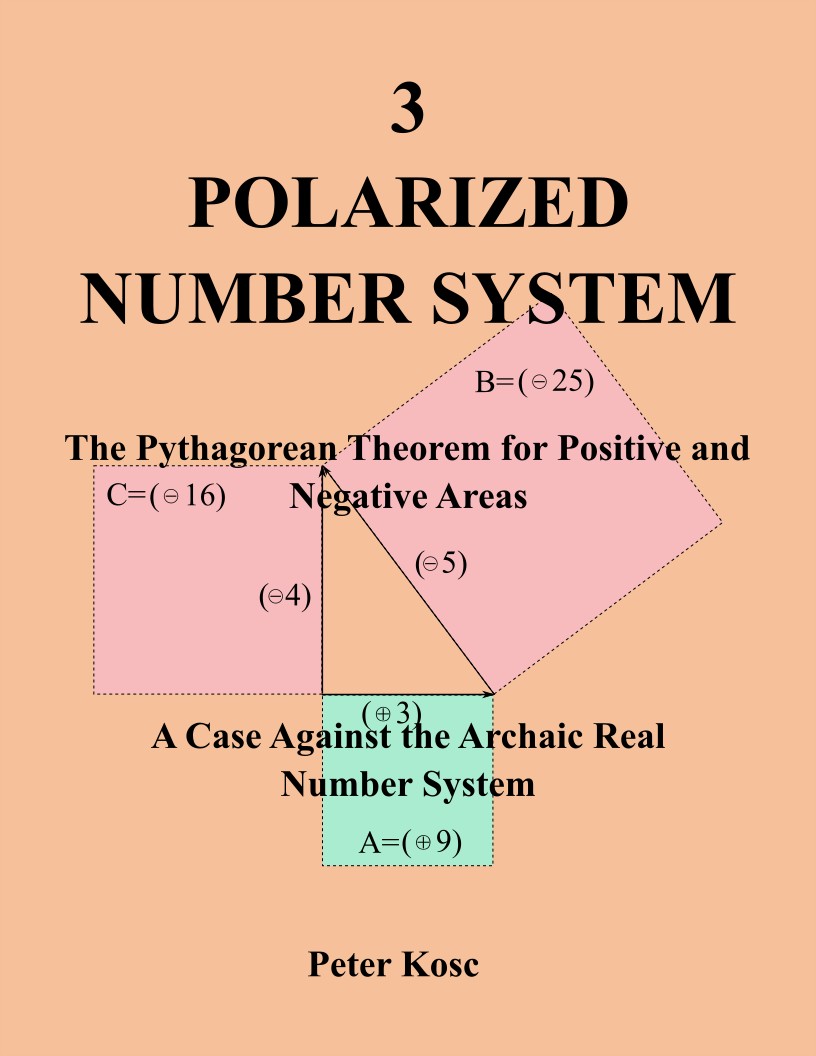
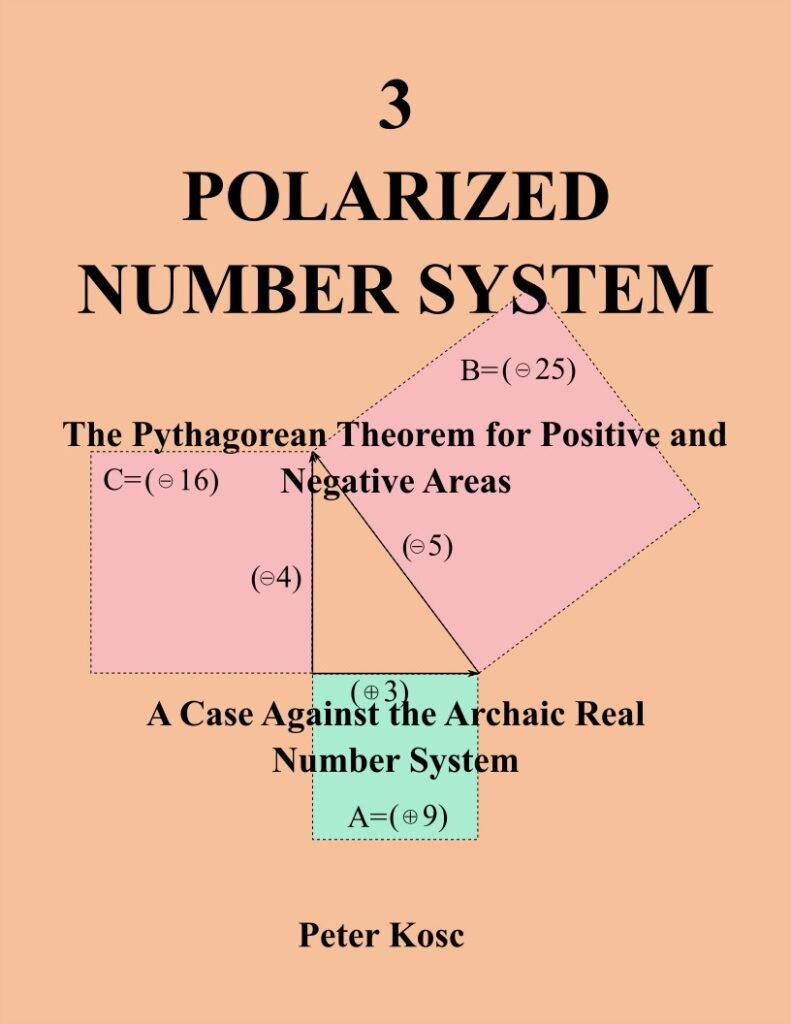
The Pythagorean Theorem for Positive and Negative Areas
Available on Amazon
WHAT IF THE MOST FAMOUS THEOREM IN MATHEMATICS IS INCOMPLETE?
For thousands of years, we have been taught a single, unyielding rule of geometry: in a right triangle, , where is always the longest side, and areas are always positive.
This book exposes the flaw in that ancient assumption.
Within the traditional real number system, the Pythagorean theorem only works for a specific subset of right triangles. Because standard arithmetic cannot process negative areas, modern geometry is forced into rigid restrictions that obscure the broader truth.
REDEFINING THE PYTHAGOREAN THEOREM
Introducing a revolutionary breakthrough in spatial mathematics, this book expands geometry through the polarized number system:
- Universal Triangles: Discover why any two sides of a right triangle can be summed to equal the third—removing the strict requirement that the largest square must sit on the hypotenuse.
- The Geometry of Negative Areas: Learn how signed, polarized numbers allow spatial areas to be natively positive or negative without breaking mathematical logic.
- Beyond Real Numbers: See exact mathematical proofs demonstrating where standard Euclidean geometry fails and how polarized arithmetic resolves the contradiction.
- A Complete Framework: Move past the “flawed and incomplete” axioms of modern mathematics to unlock a truly universal geometric law.
BUILT FOR RIGOROUS INVESTIGATION
Complete with step-by-step proofs, diagrams, and clear analytical reasoning, this volume challenges centuries of mathematical dogma. It is written for mathematicians, physicists, logicians, and open-minded thinkers ready to see geometry in a completely new light.
The final title and design are to be determined.
Polarized Number System: Beyond Euclidean Limits
Subtitle: Why the Classical Pythagorean Theorem is Incomplete
Polarized Number System: Breaking the Flaws of Classical Geometry
Subtitle: Signed Areas and the Universal Right Triangle
POLARIZED NUMBER SYSTEM - 4
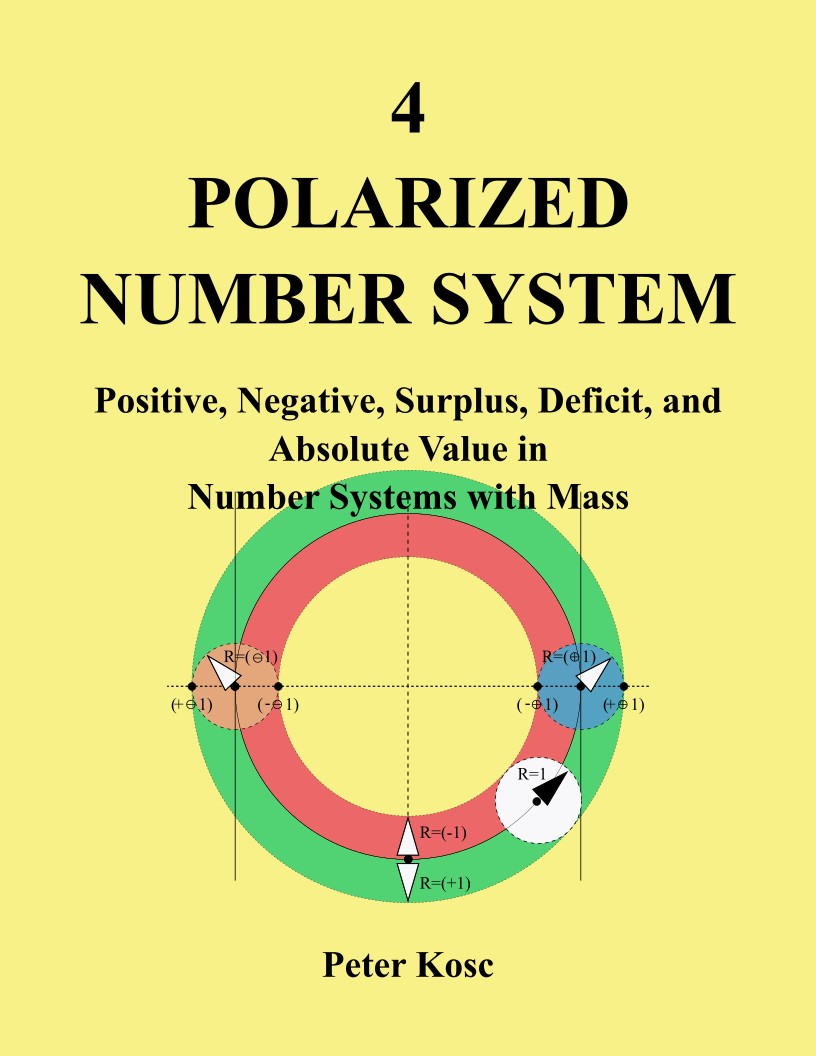
Positive, Negative, Surplus, Deficit, and Absolute Value in Number Systems with Mass
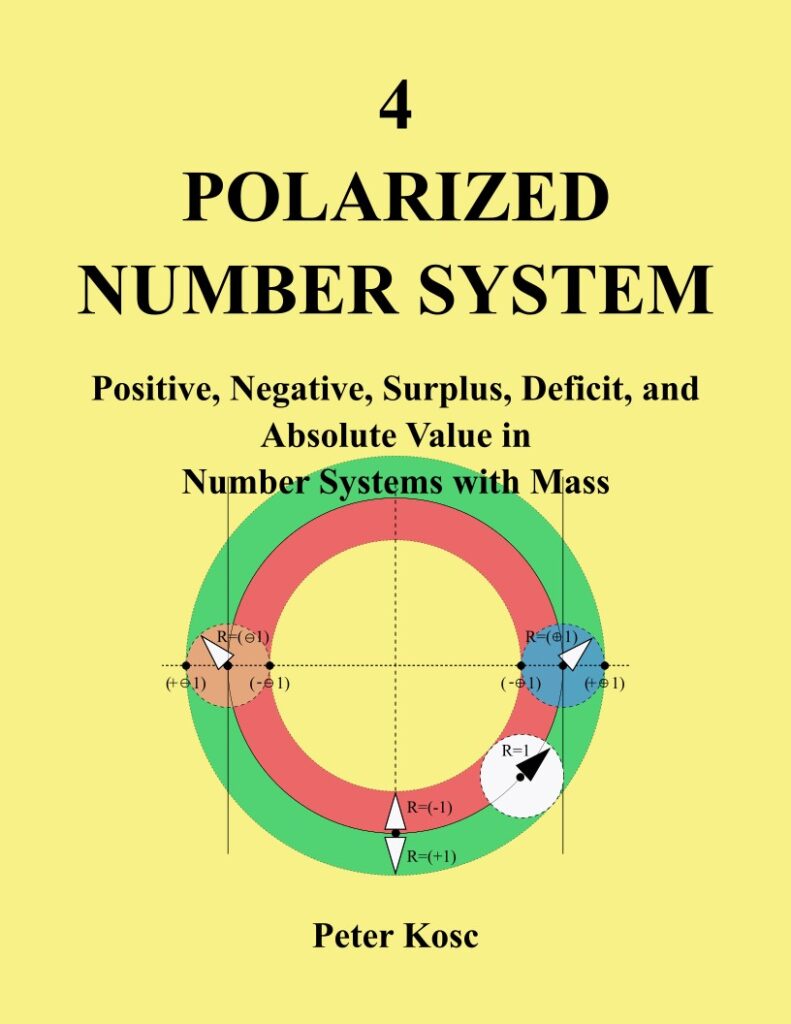
Coming Soon
WHAT IF THE REAL NUMBER LINE IS COMPLETELY WRONG?
For hundreds of years, we have drawn the number line the exact same way: zero in the middle, positives to the right, negatives to the left, with each number occupying a single point in space.
This book proves that the classical model is fundamentally flawed.
By reducing numbers to a simple positive/negative binary, standard mathematics conflates distinct concepts and creates logical paradoxes.
NINE SETS OF NUMBERS ON A SINGLE LINE
Introducing a radical expansion of foundational arithmetic, the fourth volume of the Polarized Number System series unveils a far richer framework:
- Nine Distinct Sets: Discover why every number actually exists in nine unique variants—each explicitly plotted on a number line without overlapping or coinciding.
- Decoupling Mathematical Language: Learn why “positive,” “plus,” and “surplus” are not synonymous, and why mistaking “negative,” “minus,” and “deficit” breaks mathematical logic.
- Negative Absolute Values: Explore new categories of absolute value numbers, proving that absolute values are not restricted to non-negative results.
- Safe Simplification: Master the practical techniques needed to simplify complex nine-set arithmetic without introducing the contradictions found in classical math.
RETHINKING THE BASICS OF ARITHMETIC
Complete with detailed step-by-step instructions, diagrams, and proofs, this volume is built for mathematicians, logicians, physicists, and open-minded thinkers who are ready to challenge the most basic assumptions of number theory.
The final title and design are to be determined.
Polarized Number System: The Nine-Set Number Line
Subtitle: Positive, Negative, Surplus, Deficit, and the Mechanics of Number Mass
Polarized Number System: Nine Sets of Numbers
Subtitle: Beyond the Classical Number Line
Polarized Number System: The Ninefold Number Line
Subtitle: Redefining Absolute Values, Surplus, Deficit, and Mass
POLARIZED NUMBER SYSTEM - 5
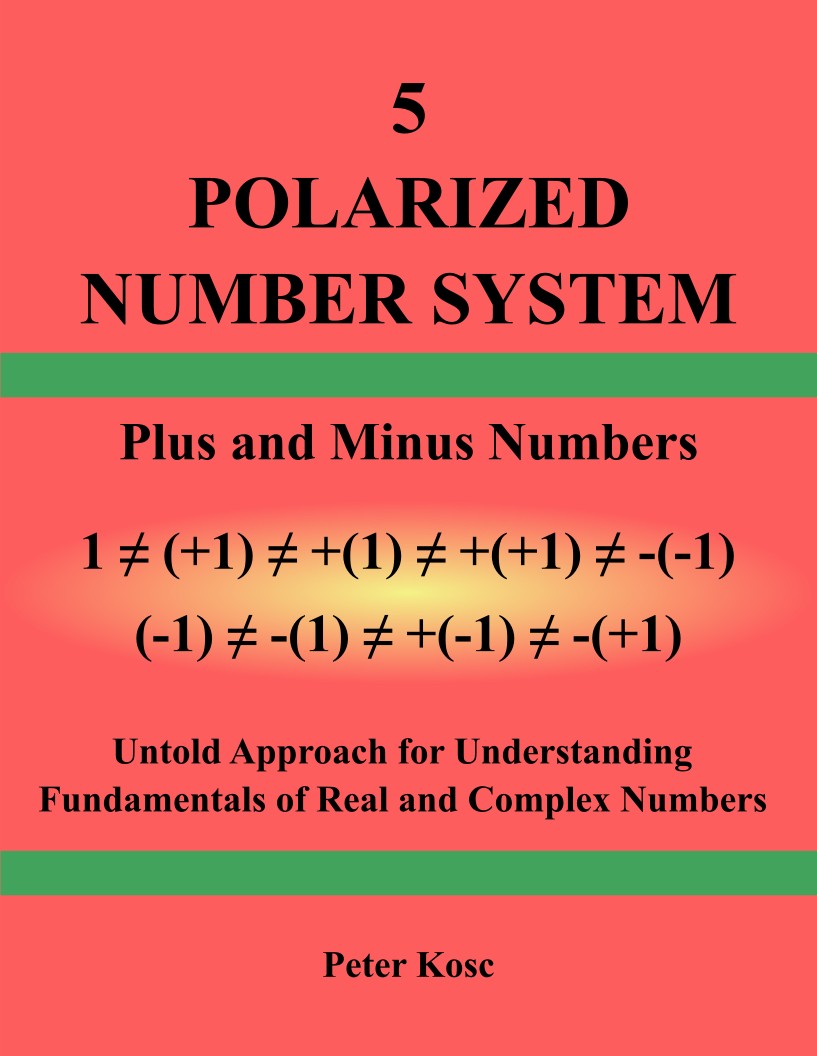
Plus and Minus Numbers, Untold Approach for Understanding Fundamentals of Real and Complex Numbers
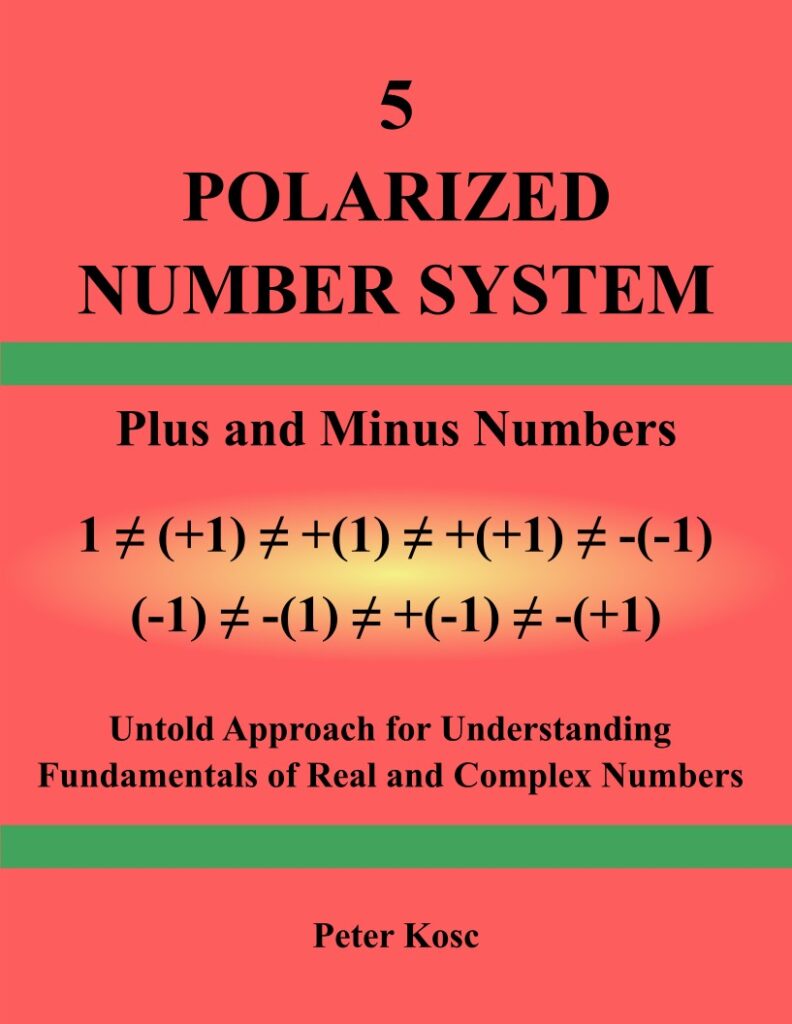
Coming Soon
WHAT IF “PLAIN” NUMBERS AREN’T POSITIVE NUMBERS AT ALL?
Centuries ago, when negative numbers were first integrated into arithmetic, mathematicians made a critical mistake: they reclassified original, “plain” numbers as positive numbers.
That single historical error fundamentally corrupted modern mathematics.
By treating plain numbers and positive numbers as identical, traditional arithmetic merged distinct concepts into one, creating the paradoxes and limitations that plague mathematics today.
UNLOCKING NINE UNIQUE SETS OF NUMBERS
The fifth volume of the Polarized Number System series takes a deep dive into the true architecture of numbers, introducing groundbreaking concepts that redefine complex analysis:
- Plain vs. Signed Numbers: Discover why un-signable “plain” numbers form a distinct class entirely separate from positive or negative values.
- Plus & Minus as Accumulated Rotation: Learn why “plus” and “minus” are not simple operators, but indicators of numerical rotation that reveal the true nature of complex numbers.
- The Nine Variants of “One”: Explore how combining positive/negative polarities with plus/minus rotations expands the basic polarized system into nine unique number sets.
- The Pitfalls of Improper Simplification: See exact proofs showing how modern math creates false results by oversimplifying distinct numerical properties.
RESTRUCTURING THE FOUNDATIONS OF MATHEMATICS
Filled with detailed proofs, logical step-by-step demonstrations, and analytical reasoning, this volume is essential reading for mathematicians, physicists, logicians, and open-minded thinkers ready to correct centuries of mathematical dogma.
The final title and design are to be determined.
Polarized Number System: Rethinking Real and Complex Numbers
Subtitle: An Unconventional Framework for Plus and Minus Numbers
Polarized Number System: Beyond Real and Complex Analysis
Subtitle: The Hidden Fundamentals of Plus and Minus Numbers
Polarized Number System: Unlocking Complex Numbers
Subtitle: A New Approach to Plus, Minus, and Plain Numbers
POLARIZED NUMBER SYSTEM - 6
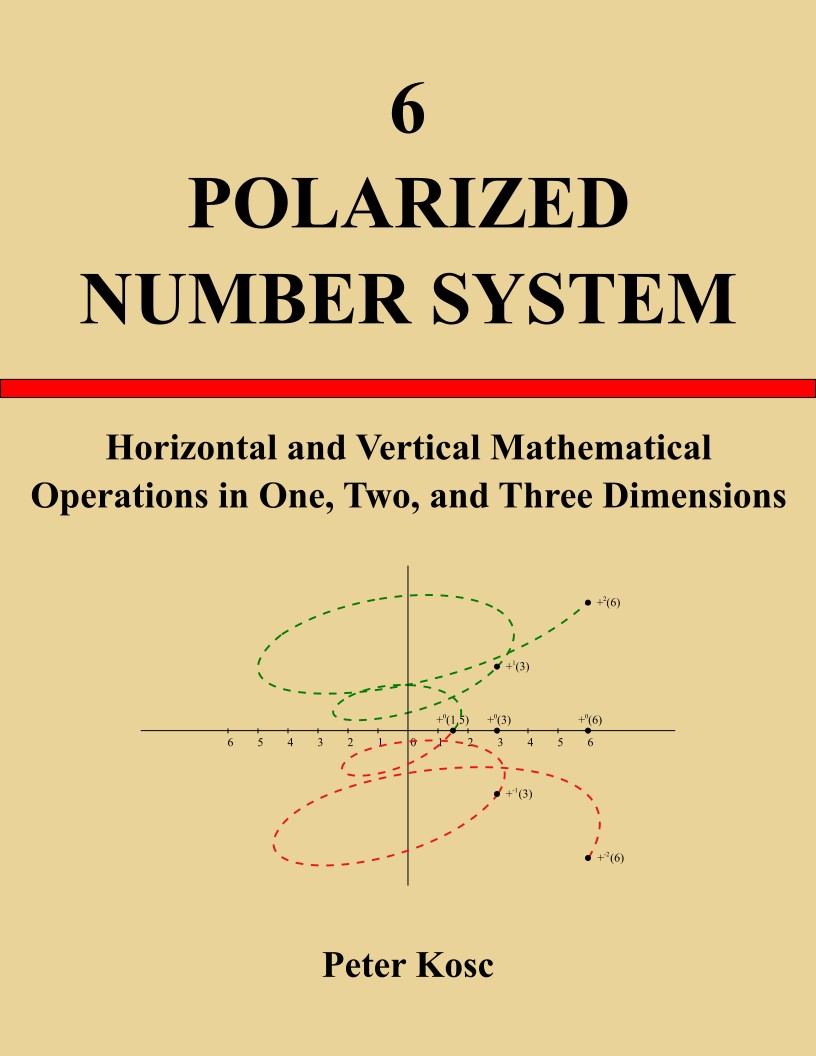
Horizontal and Vertical Mathematical Operations in One, Two, and Three Dimensions
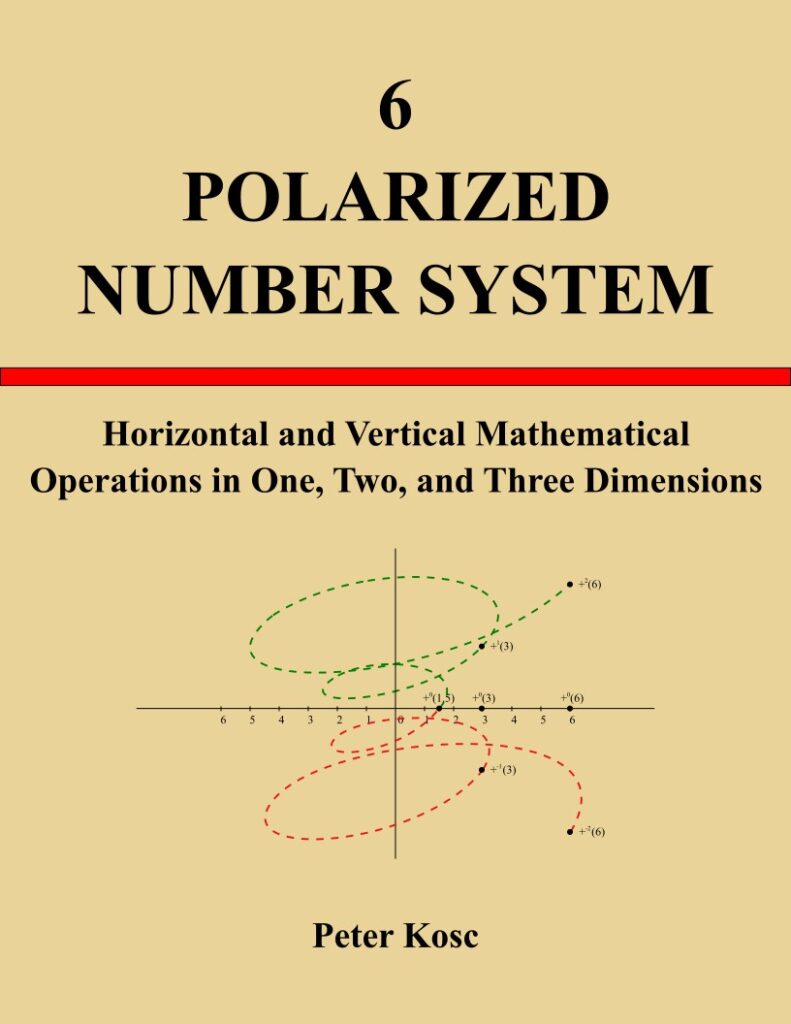
Coming Soon
WHAT IF MATHEMATICAL OPERATIONS CHANGE BASED ON DIRECTION AND DIMENSION?
Standard arithmetic treats operations the exact same way whether you are working along a single line or across multi-dimensional space.
That oversimplification creates hidden blind spots in higher-dimensional mathematics.
The sixth volume of the Polarized Number System series breaks through these limitations by establishing native horizontal and vertical operations built specifically for 1D, 2D, and 3D space.
MULTI-DIMENSIONAL POLARIZED ARITHMETIC
Moving beyond standard coordinate systems, this volume introduces a complete operational framework for spatial mathematics:
- Directional Operations: Discover how horizontal and vertical orientations alter the execution and results of core mathematical operations.
- 1D, 2D, and 3D Integration: Learn how polarized number principles scale seamlessly from a single axis to complex three-dimensional environments.
- Eliminating Dimensional Contradictions: See how native multi-axis operations prevent the logical errors caused by collapsing 3D problems into 1D formulas.
- Practical Spatial Logic: Master step-by-step techniques for applying directional arithmetic to geometry, physics, and vector analysis.
ENGINEERED FOR RIGOROUS APPLICATION
Packed with detailed diagrams, step-by-step proofs, and comprehensive exercises, this volume serves as both an instructional textbook and an authoritative reference manual. It is built for mathematicians, physicists, logicians, and spatial theorists ready to master multi-dimensional arithmetic.
The final title and design are to be determined.
Polarized Number System: 3D Polarized Operations
Subtitle: A Unified Framework for Horizontal and Vertical Arithmetic
Polarized Number System: Spatial Axis Arithmetic
Subtitle: Directional Operations in One, Two, and Three Dimensions
Polarized Number System: Vector-Spatial Operations
Subtitle: Rebuilding 1D, 2D, and 3D Mathematical Logic
POLARIZED NUMBER SYSTEM - 7
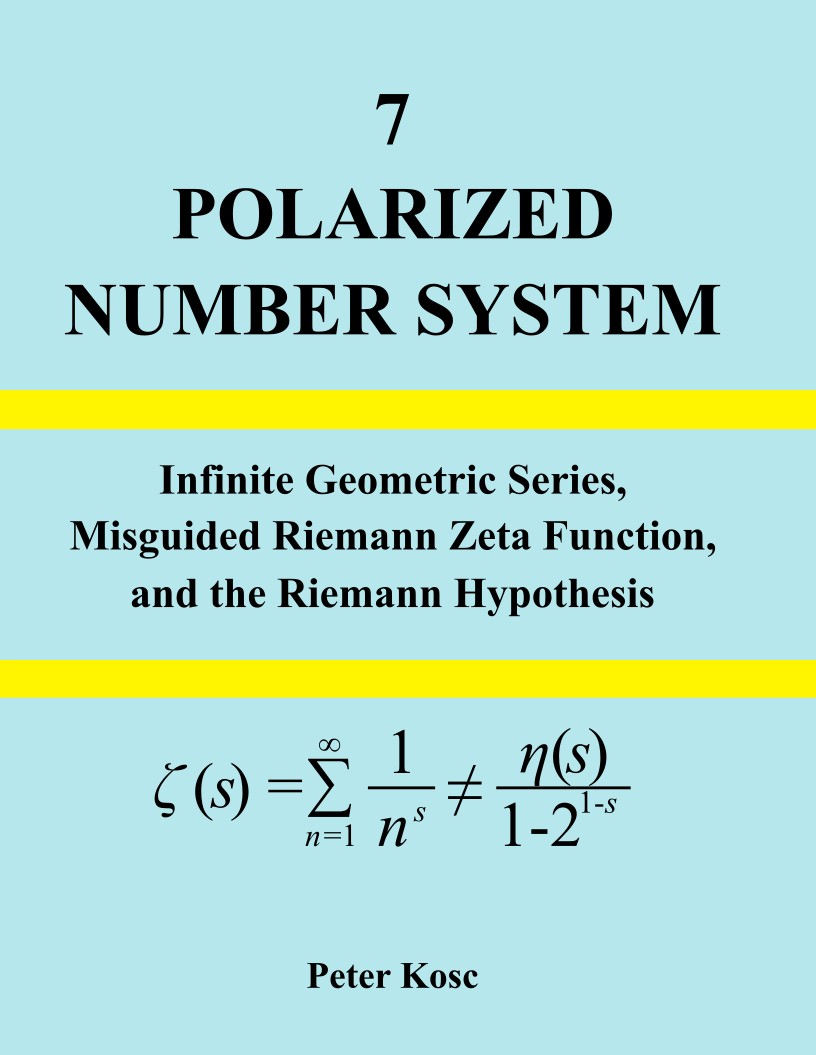
Infinite Geometric Series, Misguided Riemann Zeta Function, and the Riemann Hypothesis
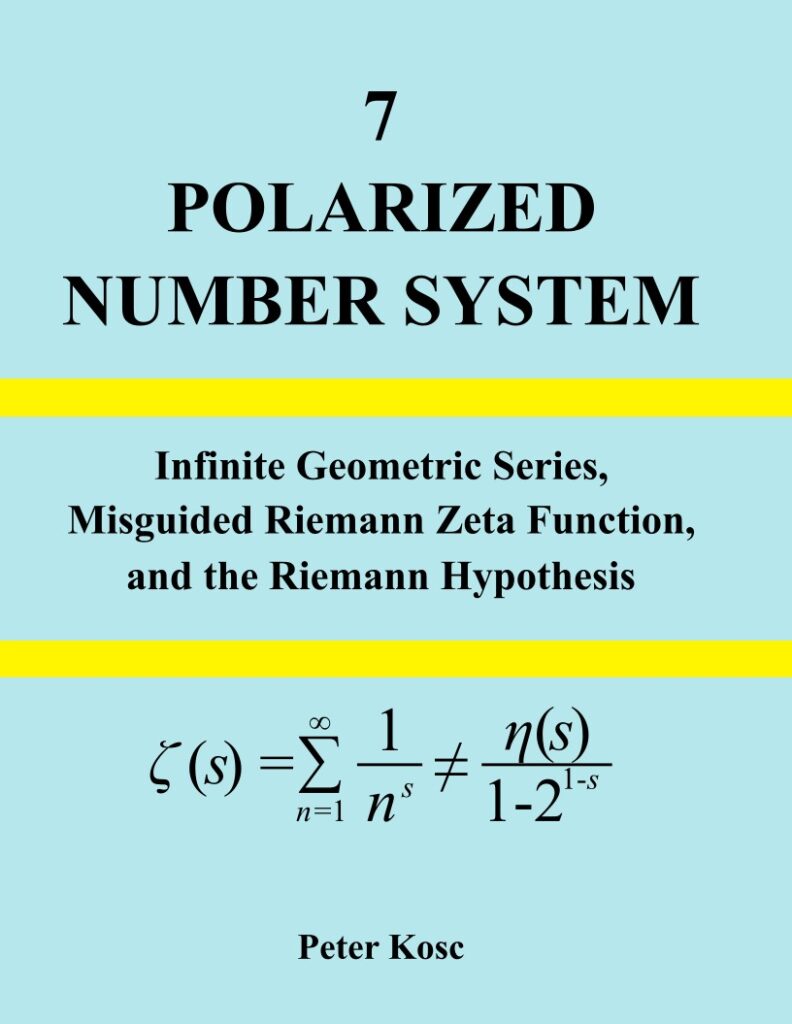
Coming Soon
WHAT IF MATHEMATICS’ MOST FAMOUS UNSOLVED PROBLEM IS BASED ON A FLAWED FOUNDATION?
For over a century, the Riemann hypothesis has held elite status as the “cream of the crop” among unsolved mathematical problems. Its properties govern complex analysis, number theory, and prime distribution.
This book exposes the fundamental errors that uphold it.
By relying on analytic continuation to justify contradictory values in divergent infinite series, classical mathematics has masked deep logical flaws at the root of complex analysis.
DISMANTLING THE ZETA FUNCTION
The seventh volume of the Polarized Number System series presents a comprehensive, step-by-step critique of classical zeta function theory and offers a logically sound alternative:
- Part I — Redefining Infinite Series: Discover new, polarized definitions of zero and infinity that resolve long-standing incompleteness in the formula for infinite geometric series.
- Part II — Deconstructing the Riemann Hypothesis: Examine detailed proofs exposing where Euler’s product formula and the Dirichlet eta function break down in traditional derivations.
- The Limits of Analytic Continuation: Learn why alternative formulas that contradict their underlying series represent flawed logic rather than valid mathematical extensions.
- A Polarized Solution: Explore how polarized arithmetic natively handles divergent series without relying on artificial workarounds or contradictory claims.
DECIDE THE EVIDENCE FOR YOURSELF
Written as an exhaustive analytical reference manual complete with step-by-step demonstrations, this volume challenges centuries of mathematical consensus. It is essential reading for mathematicians, theoretical physicists, logicians, and open-minded thinkers ready to scrutinize the foundations of modern analysis.
The final title and design are to be determined.
Polarized Number System: The Riemann Hypothesis Deconstructed
Subtitle: Infinite Geometric Series and the Misguided Zeta Function
Polarized Number System: Infinite Series and the Riemann Hypothesis
Subtitle: Exposing the Flaws of the Riemann Zeta Function
POLARIZED NUMBER SYSTEM - 8
Exponential Function. Order in the Complex Number System
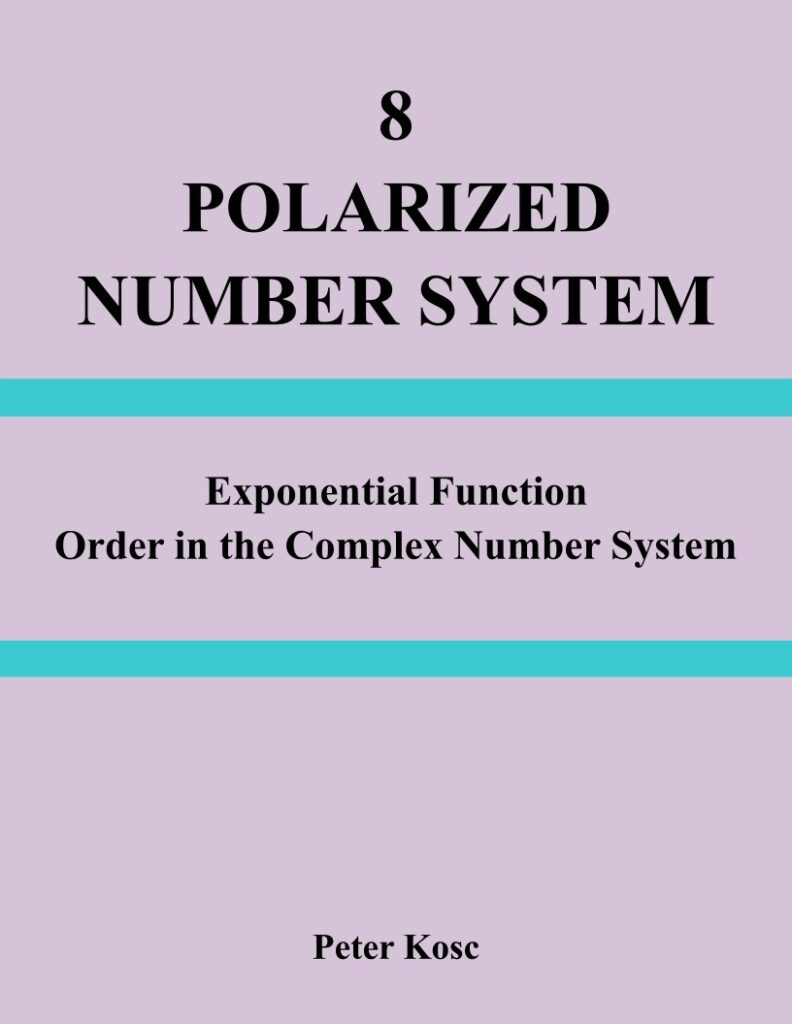
Coming Soon
WHAT IF “IMAGINARY” NUMBERS ARE PHYSICALLY REAL?
In standard mathematics, complex numbers are often treated as abstract tricks or mathematical shortcuts—essential for quantum physics and engineering, but disconnected from daily reality.
This book proves that conventional understanding is completely wrong.
The eighth volume of the Polarized Number System series strips away the mystery surrounding complex numbers, revealing them as physical, observable elements of the space we inhabit.
REFRAMING COMPLEX ANALYSIS THROUGH REALITY
Moving beyond abstract formulas, this volume grounds complex numbers in tangible, real-world experiments:
- The Imaginary Unit Unmasked: Discover why the “imaginary” unit is not a number at all, but an explicit spatial direction.
- Countable Imaginary Objects: Learn how in a polarized system, everyday items—like apples, bananas, and oranges—can exist in positive, negative, or “imaginary” states.
- Thought Experiments in Motion: Explore real-life train experiments that establish the physical “value” and ordering of complex numbers on a 2D plane.
- The Christmas Tree Simulation: See how simple physical setups, including Christmas tree ornaments, can model complex functions and simulate problems as advanced as the Riemann Hypothesis.
- Taylor Series & Exponentials: Master the exponential function using the series’ distinctive notation to unlock intuitive complex arithmetic.
A PHYSICAL FRAMEWORK FOR ADVANCED MATH
Filled with step-by-step proofs, physical diagrams, and thought experiments, this volume is written for mathematicians, physicists, engineers, and open-minded thinkers ready to bridge the gap between abstract complex analysis and physical reality.
The final title and design are to be determined.
Polarized Number System: Imaginary Numbers Are Real
Subtitle: The Exponential Function and the Order of Complex Numbers
Polarized Number System: The Physics of Imaginary Numbers
Subtitle: Spatial Directions, Exponential Functions, and Complex Value
Polarized Number System: Beyond Abstract Imagination
Subtitle: Understanding Value and Order in the Complex Number System
POLARIZED NUMBER SYSTEM - 9
Zero and Infinity
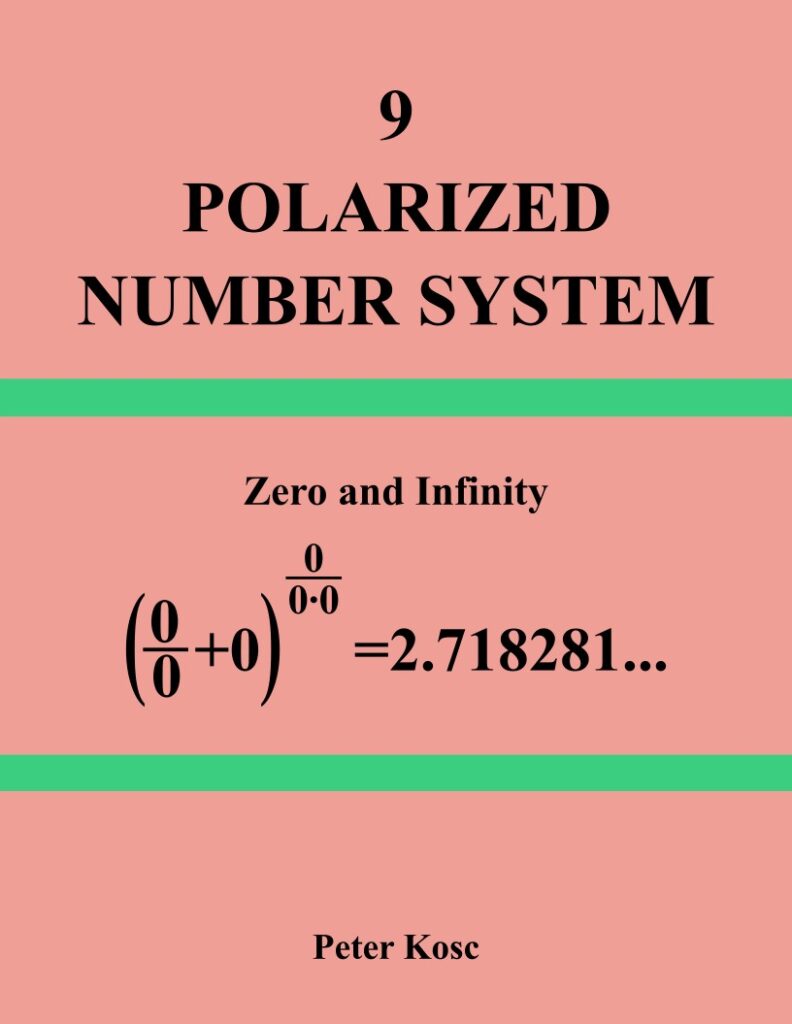
Coming Soon
The final title and design are to be determined.
Polarized Number System: Rethinking Zero and Infinity
Subtitle: How Classical Mathematics Got the Extremes Wrong
Polarized Number System: Beyond Zero and Infinity
Subtitle: Signed Polarities at the Extremes of the Number Line
Polarized Number System: The Infinity Paradox
Subtitle: Polarized Solutions for Zero, Infinity, and Indeterminate Operations